


Xiaomi has once again taken center stage in India’s tablet market. The company has unveiled the Xiaomi Pad 8—the latest addition to its popular tablet series—which arrives accompanied by both notable upgrades and a fair share of controversy compared to its predecessor.
At one time, the Xiaomi Pad series garnered an immense response in the market for offering powerful hardware within an affordable budget. This series became particularly popular among mid-range users following the launch of the Xiaomi Pad 5. However, market competition has intensified over time, and the Xiaomi Pad 8 is now striving to carve out its own niche amidst this fierce rivalry.
Familiar Design, Premium Finish
In terms of design, the Xiaomi Pad 8 introduces very little in the way of novelty. Much like its predecessor, the Pad 7, it features an aluminum metal body that offers a premium feel in the hand. Although the tablet weighs approximately 494 grams, its excellent weight distribution ensures that extended usage does not result in any significant discomfort.
However, a major disappointment for many users is the continued absence of SIM card support; meaning, the device has launched exclusively as a Wi-Fi variant. For those who wish to use their tablet while relying on mobile data, this remains a significant limitation.
Robust Battery, Minor Charging Limitations
The Xiaomi Pad 8 is equipped with a 9,200mAh battery, which proves sufficiently reliable for daily use. Whether for watching videos, browsing the web, or handling light productivity tasks, the device is capable of delivering over a full day of battery backup.
Although a 67W charger is included in the box, the device itself supports fast charging up to a maximum of 45W. Consequently, while the charging speed is certainly respectable, it may fall slightly short of user expectations.
Quad Speakers, Software Bug Concerns
In the audio department, the Xiaomi Pad 8 features a quad-speaker setup with Dolby Atmos support. On paper, this constitutes a rather powerful audio configuration.
However, real-world usage has revealed a peculiar issue: audio volume appears relatively low when using the YouTube app, whereas the sound quality remains excellent on YouTube Music and other applications. This is likely a software bug that may be resolved in future updates.
Display: Nano-Texture—Who Is It For?
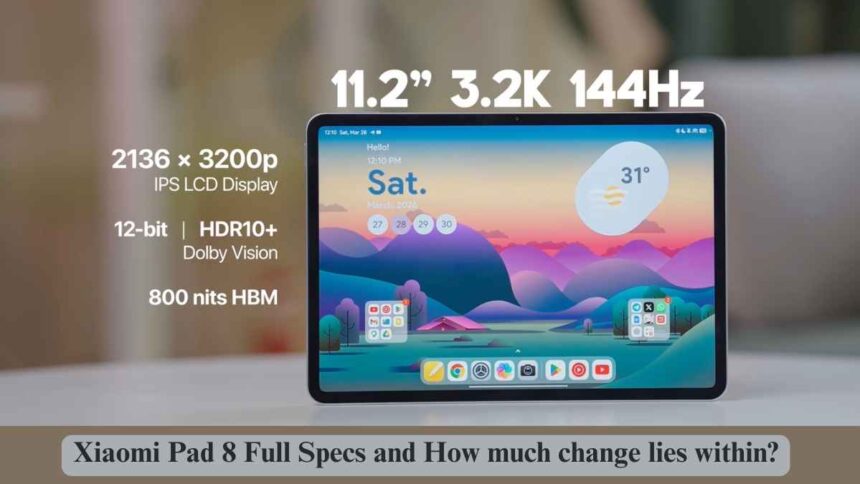
One of the major highlights of this tablet is its Nano-Texture Display. It features an 11.2-inch IPS LCD panel with a 3.2K resolution and a 144Hz refresh rate. With support for HDR and Dolby Vision, it offers an excellent viewing experience on platforms like Netflix.
However, due to the Nano-Texture technology, one thing is evident—colors appear slightly less vibrant or somewhat dull. Its primary objective is to minimize reflections and provide a paper-like tactile feel when writing.
This feature is highly beneficial for those who take notes or create drawings using a stylus. However, for users who primarily use their tablet for watching movies or general video consumption, this display might not seem quite as appealing.
Performance: Powerful, Yet Not Entirely Flawless
In terms of performance, the Xiaomi Pad 8 is quite robust. It is powered by the Snapdragon 8s Gen 4 processor, paired with LPDDR5X RAM and UFS 4.1 storage (in the higher-end variants).
Whether for daily use, multitasking, or gaming, it delivers a fast and smooth experience across the board. However, some games are not yet fully optimized for the device, which can occasionally lead to issues such as reduced graphics quality.
Additionally, HyperOS 3—which is based on Android 16—still contains a few minor bugs. While these do not constitute major issues, they do slightly detract from the overall premium user experience.
Multitasking and Productivity
As a tablet, the Xiaomi Pad 8 offers excellent multitasking capabilities. Features such as Split Screen, Floating Window, and a Taskbar empower users to handle multiple tasks simultaneously.
However, in terms of software optimization, it still lacks the fluidity found in the iPad. For users who rely on tablets primarily for productivity, this distinction could be a significant factor.
Focus Pen Pro: Improved, Yet Limited
The new Focus Pen Pro introduces several enhancements, featuring pressure sensitivity, palm rejection, and haptic feedback.
However, unlike its predecessor, it lacks physical buttons—a drawback that may inconvenience some users. Nevertheless, it delivers solid performance for tasks such as note-taking and sketching.
Focus Keyboard: A Major Design Flaw
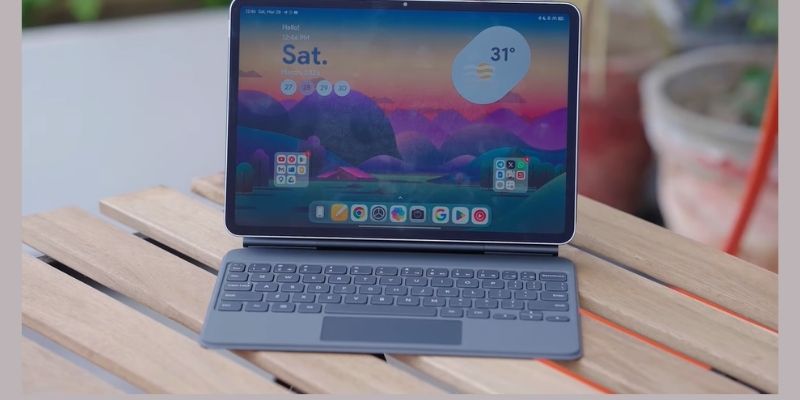
The Focus Keyboard accompanying the Xiaomi Pad 8 has drawn criticism. Despite its price tag of approximately 9,000 BDT, it suffers from a major design flaw: it lacks sufficient angle adjustability.
Consequently, when working at a desk, it becomes difficult to position the screen at an optimal viewing angle. Many users feel that, at this price point, one should reasonably expect a superior design.
Camera: Sufficient for Essential Tasks
Tablet cameras are typically not a primary concern, and the Xiaomi Pad 8 adheres to this convention.
It features a 13-megapixel rear camera and an 8-megapixel front-facing selfie camera, strategically positioned for horizontal video calls. These cameras prove sufficiently effective for tasks such as document scanning and video conferencing.
Price and Competition: A Tough Battle
The base variant of the Xiaomi Pad 8 is priced between approximately 30,000 and 31,000 BDT, while the higher-end variants can reach up to 38,000–39,000 BDT.
At this price point, the market is currently populated by several formidable competitors. The OnePlus Pad series and the Apple iPad (11th Gen) are creating intense competition within this segment.
The iPad, in particular, is emerging as the top choice for many users, thanks to its long-term software support and sophisticated ecosystem.
So, Should You Buy the Xiaomi Pad 8? The Xiaomi Pad 8 is an excellent choice for users seeking a powerful Android tablet who prioritize performance.
However, those looking for a flawless software experience, advanced accessories, or a long-term investment should consider other alternatives as well.
- Essentially, the Xiaomi Pad 8 is an upgraded version of the Pad 7, featuring refinements in both performance and display. However, due to its increased price point and intensifying market competition, it no longer holds the title of the “Value-for-Money King” that its predecessor once enjoyed.
- In the current market landscape, it stands as a balanced option—one where both its strengths and weaknesses must be weighed equally.
