

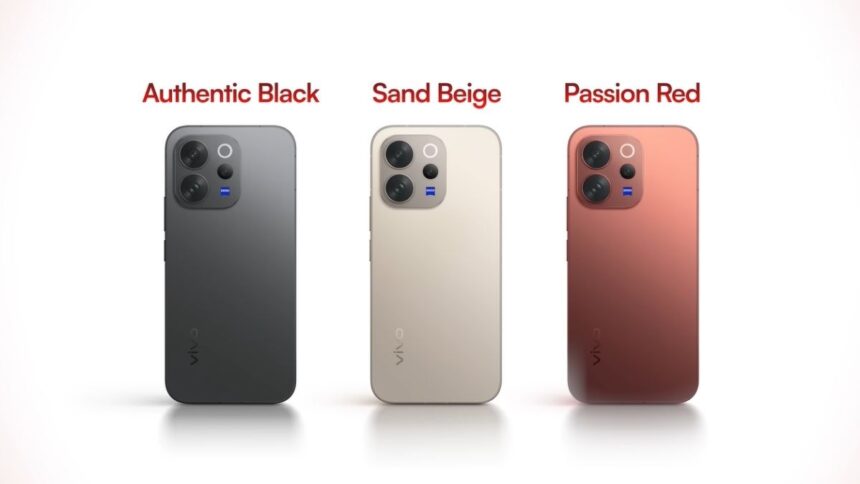
Vivo has brought the next generation of its popular V series—the Vivo V70 series. While the previous V60 series focused mainly on design and camera, the new V70 series has given equal importance to performance. This series has two main models—the Vivo V70 and the Vivo V70 Elite.
Let’s take a look at how this new series is in all aspects, from unboxing to design, display, performance, camera, and software.
What’s in the box
A premium experience is available as soon as you open the box of the Vivo V70 series. Inside the box, you will find—
- A transparent protective case
- User documentation
- 90W flash charger
- USB Type-A to Type-C cable
- SIM ejector tool
The charger provided in the box at this price is a big advantage for users.
Design and Build: Premium Look and Comfortable Feel
The V series has always been known for its stylish design. The V70 series has maintained that trend as well.
Interestingly, it’s almost impossible to tell the V70 and V70 Elite apart from each other when viewed from the front or back. The design of the two is similar.
In-hand feel
- Weight: Around 190–196 grams
- Metal frame
- Glass or fiberglass back
The phone is not too heavy, nor is it too thin. It has a balanced feel when held in the hand. It can be used easily even by small hands, so one-handed use is not a problem.
Color Options
- Passion Red (Glass Back)
- Black (Fiberglass Back)
Ports & Buttons
Bottom:
- Speaker
- Microphone
- USB Type-C Port
- SIM Tray
Top:
- Secondary Speaker
- IR Blaster
- Noise-Cancelling Microphone
Right Side:
- Volume Rocker
- Power Button
The phone has received a 5-star drop rating certification from SGS, which adds confidence to its build quality.
Display: Bright and Immersive Experience
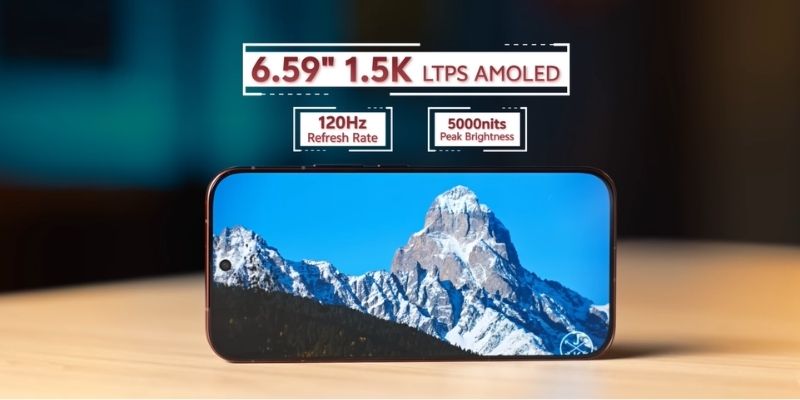
The Vivo V70 series features a 6.59-inch LTPS display, which is a bit compact compared to many of today’s larger phones.
Display Specifications
- 6.59-inch screen
- 1.5K resolution
- 120Hz refresh rate
- 1.2mm thin bezel
- 5000 nits peak brightness
- 1800 nits HBM
- HDR10+ support
The display is very bright and the color quality is also good. It is great for watching HDR content on Netflix or YouTube.
Multimedia
- Stereo speakers
- High volume
- Clear sound
A good experience is available while watching videos or playing games.
Performance: Here is the main difference
The main difference between Vivo V70 and V70 Elite is in the processor.
Vivo V70
- Snapdragon 8s Gen 4
- AnTuTu score: around 1.4–1.5 million
Vivo V70 Elite
- Snapdragon 8s Gen 3
- AnTuTu score: around 1.9 million
The Elite version clearly offers stronger performance.
RAM and Storage
- LPDDR5X RAM
- UFS 4.1 Storage
This is a big upgrade over the V60 series.
Battery and Charging
- About 5000mAh battery
- 90W fast charging
Despite being a compact phone, the battery backup is good. It easily lasts a day or a day and a half with moderate usage.
Gaming Performance
The phone gave good gaming performance in real-world tests.
Light games
- BGMI
- COD Mobile
Support up to 90–120 FPS.
Heavy games
- Genshin Impact
- Wuthering Waves
Around 55–60 FPS is available. The temperature can rise to 40–43°C when playing games for a long time, but there is no major lag.
Software: OriginOS 6
OriginOS 6, which is based on Android 16, is the first in the V series.
Update Support
- 4 years of Android updates
- 6 years of security updates
Key Features
- AI Search
- Global Search
- Origin Island
- Advanced Customization
The OS looks modern and smooth.
Connectivity and Security
- Wi-Fi 6
- Bluetooth 5.4
- NFC
- IR Blaster
- 11 5G bands
- Dual Nano SIM
Security:
- Ultrasonic Fingerprint
- Face Unlock
Camera: The main attraction of the V series
The camera is the biggest focus in the Vivo V70 series.
Rear Camera
- 50MP Primary
- 8MP Ultra-Wide
- 50MP 3x Telephoto
Selfie Camera
- 50MP
Image Quality
- Good HDR
- Natural colors
- Good details
Image quality has improved due to Zeiss optimization.
Portrait
- 23mm to 100mm focal length
- Multi-focal portrait
Video
4K 60fps (primary, telephoto, selfie)
No 4K on ultra-wide
Camera features
- Night mode
- Portrait
- Food mode
- Astro mode
- Super Moon
- Time-lapse
- Underwater photography
The phone is IP68/IP69 certified, so you can take pictures underwater. You will get a lot of filters etc. in Hi. Along with this there is night mode, portrait mode, photo, video micro movie mode, which means you have to post on social media etc.
There are also a lot of filters available for that. Look, you take portraits, casual food photos. If you are a food blogger etc then this will be very helpful for you. There are a lot of different filters, i.e. a sports mode.
Then you have high resolution, panorama mode, ultra HD document, slow motion, time lapse, super moon mode, stage mode, astro mode, pro mode, snapshot, food mode. It doesn’t have 4K but you can shoot 4K 60fps with all other sensors, primary, telephoto and selfie, and generally the V series focuses on selfies too.
If you look at it, there is a 92° FOV. So you need to take group selfies etc. 4K 60fps is enough to record your shots and multifocal portraits are awesome and because of the zoom you can also take multifocal portraits etc. You can take portraits from 23mm to 100mm
AI features
- Audio Noise Eraser
- Magic Weather
- AI Portrait Effects
Price
Starting at around ₹45,000
Top variant: up to ₹52,000
Last word
- The biggest weakness of the V60 series was performance. The V70 Elite solves that problem.
- Key Strengths of the V70 Series
- Premium Design
- Compact yet Stylish
- Bright Display
- Powerful Performance (Elite)
- Good Camera
- New OriginOS
Overall, the Vivo V70 series is a balanced package, where design, camera, and performance—everything—are well-balanced. There is no notification light, but you get an Aura light on the back, which makes it easier to take portraits in low light and in different situations. So that’s it. So, guys, this is the V70 and the V70 Eight.
If I compare it to the V60, it is definitely a big upgrade. Another thing was that the V series was not that good in terms of performance, with the V70 Eight they changed that. So, along with the performance, there is also the looks, the design, the handheld display, and now the Origin OS. So, there is not much to complain about.